
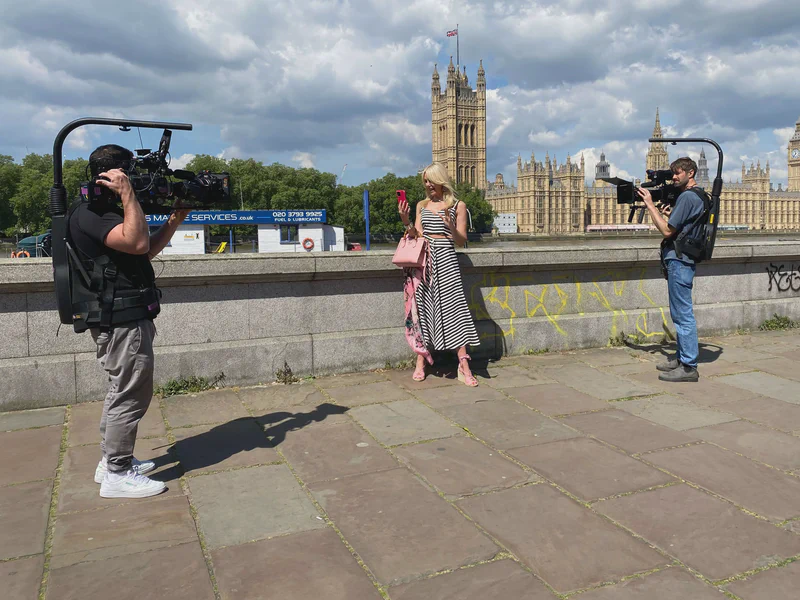
The Real Housewives of London - Season 1
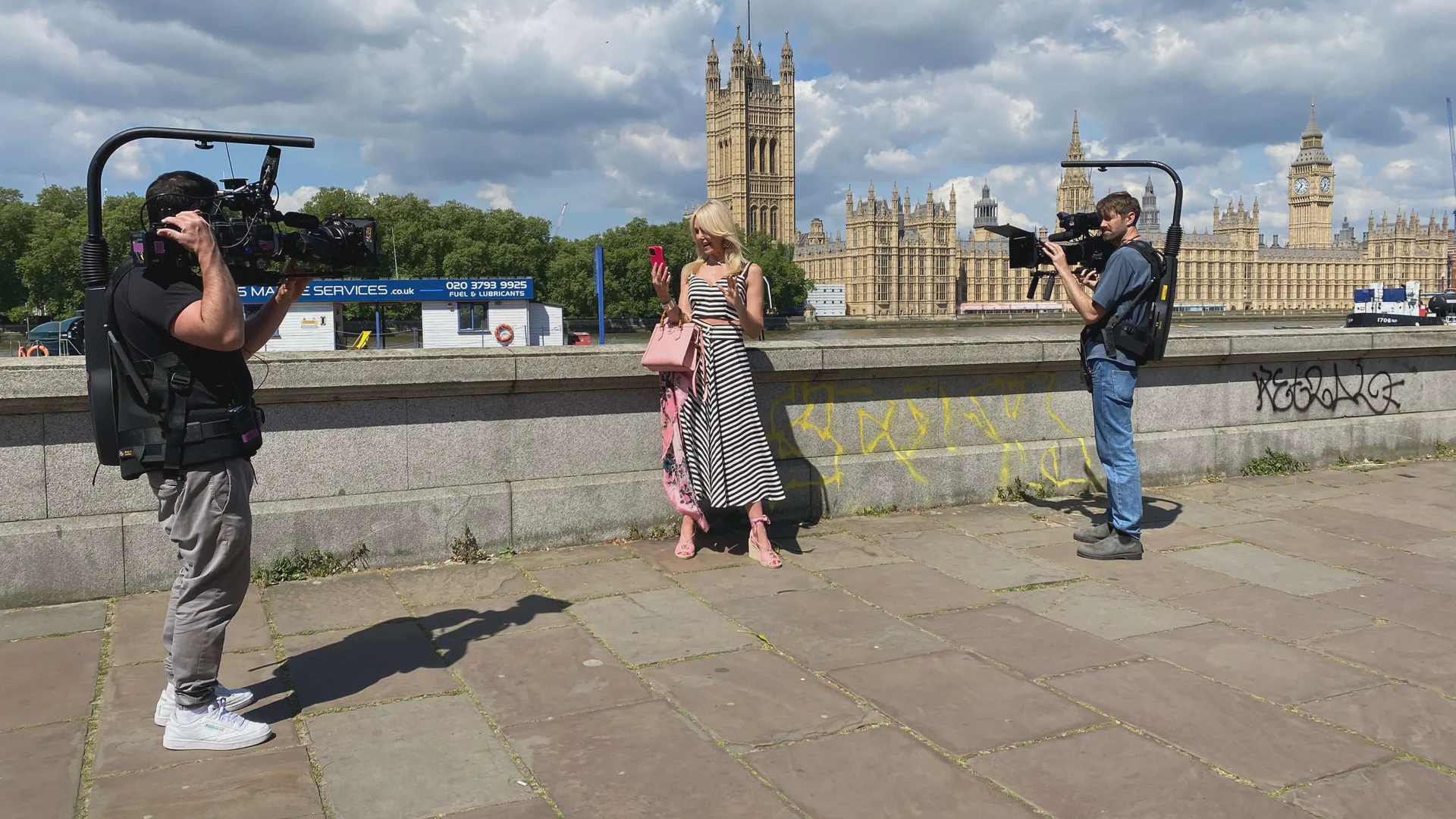
The Real Housewives of London - Season 1
The Real Housewives of London – Season 1
Sound Department Technical Overview
The creative brief for The Real Housewives of London was clear: the show needed to feel real, organic, and free-flowing. The cast had to be fully immersed in their environments, with production responding to events as they unfolded rather than controlling them. Scenes ranged from intimate two-person conversations to large-scale dinners and parties involving anywhere from eight to fifteen cast members. Once filming began, we allowed moments to play out naturally—often rolling continuously for several hours and only stopping once a scene had organically concluded. All filming took place in live locations with live music, paying customers, and the full range of ambient noise that comes with uncontrolled environments. This presented very different challenges compared to working on locked-off or controlled sets.
Audio Approach
To successfully capture audio in these conditions, we required a sound setup that was highly adaptable and easily expandable, capable of responding to any location or scenario we encountered. For large-scale events, production could involve up to six free-roaming cameras on zoom lenses, supported by two sound recordists. In these situations, it was often impossible to deploy a boom microphone effectively or to secure time and space to record clean wild tracks. To mitigate this, we frequently hid multiple plant microphones around the venue to capture continuous ambient audio, providing the edit with a consistent wild track for post-production. Given the nature of the show, cast members were free to roam and interact with anyone at events. This required both sound recordists to have real-time access to every cast member’s radio microphone, regardless of where they were within the space.
Wireless System & Recording Strategy
To achieve the required flexibility, we opted for the Wisycom ecosystem. Each sound bag was configured with 12 channels of Wisycom wireless, alongside recordable transmitters operating in 32-bit float.
Why 32-Bit Float?
Using 32-bit float recording offered several key advantages:
- If a cast member moved out of RF range, we retained a secure backup via the onboard recording in the transmitter.
- On travel days or location moves, there were situations where monitoring RF, maintaining range, or accessing transmitters was not feasible for extended periods. In these scenarios, 32-bit float recording proved invaluable.
Case Study: Season 1, Episode 8
Episode 8 presented one of the most complex logistical challenges of the season. The day began filming in London, followed by the cast boarding a private jet to a private airport in Scotland, and then travelling by chauffeur to a castle location. We needed to capture clean, uninterrupted audio throughout this entire journey. Due to space constraints and logistics, the sound team was divided across multiple locations: one team in London, one at the airport, and one at the final location. The process became a relay of handovers, with sound bags often left running in vehicles for several hours at a time. In these situations, the workflow involved setting levels, engaging record, and—where possible—using high-powered RF boosters to allow monitoring from follow vehicles (though this was, of course, not possible during helicopter travel).
Results & Post-Production Benefits
This is where 32-bit float and recordable transmitters truly came into their own:
- They provided confidence that we had clean, uninterrupted ISO recordings, free from RF dropouts or interference—even when monitoring was impossible.
- In addition to delivering the standard daily 24-bit mix tracks and ISOs, we were also able to supply post-production with direct microphone ISO recordings. These files offered greater dynamic range and were free from RF compression, allowing editors greater flexibility when remixing scenes and balancing dialogue in post.
Project Gallery


